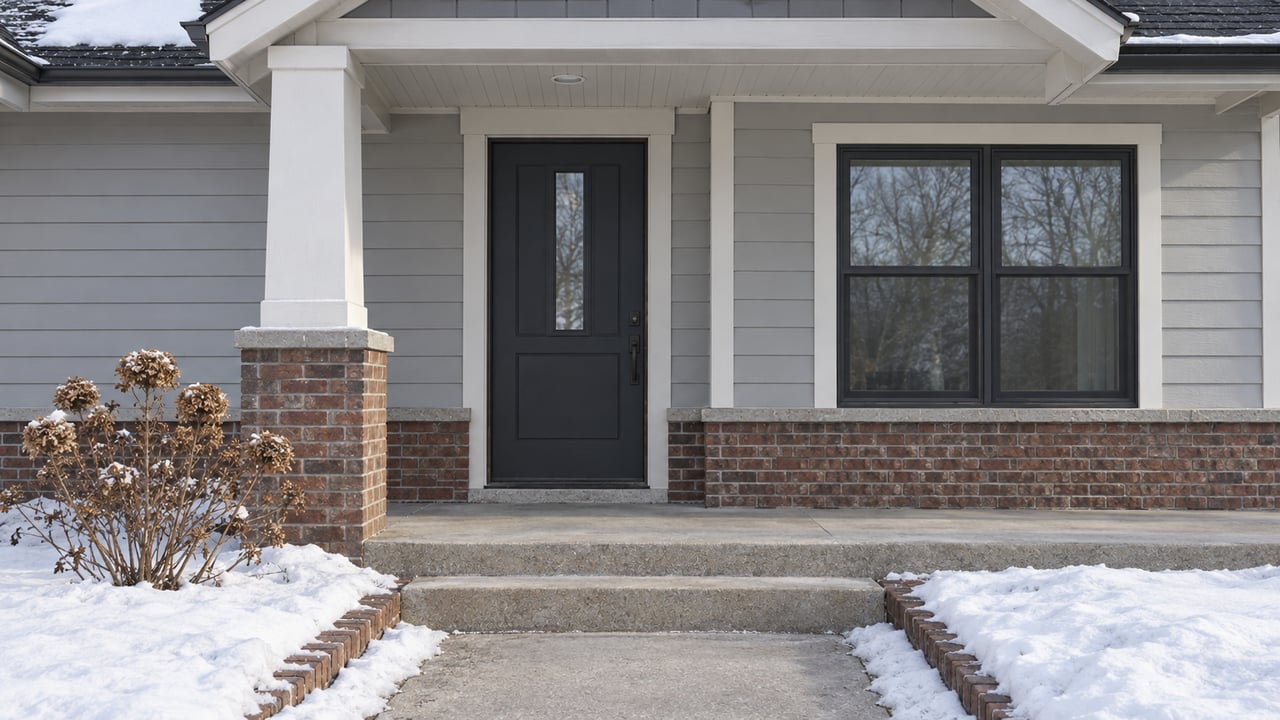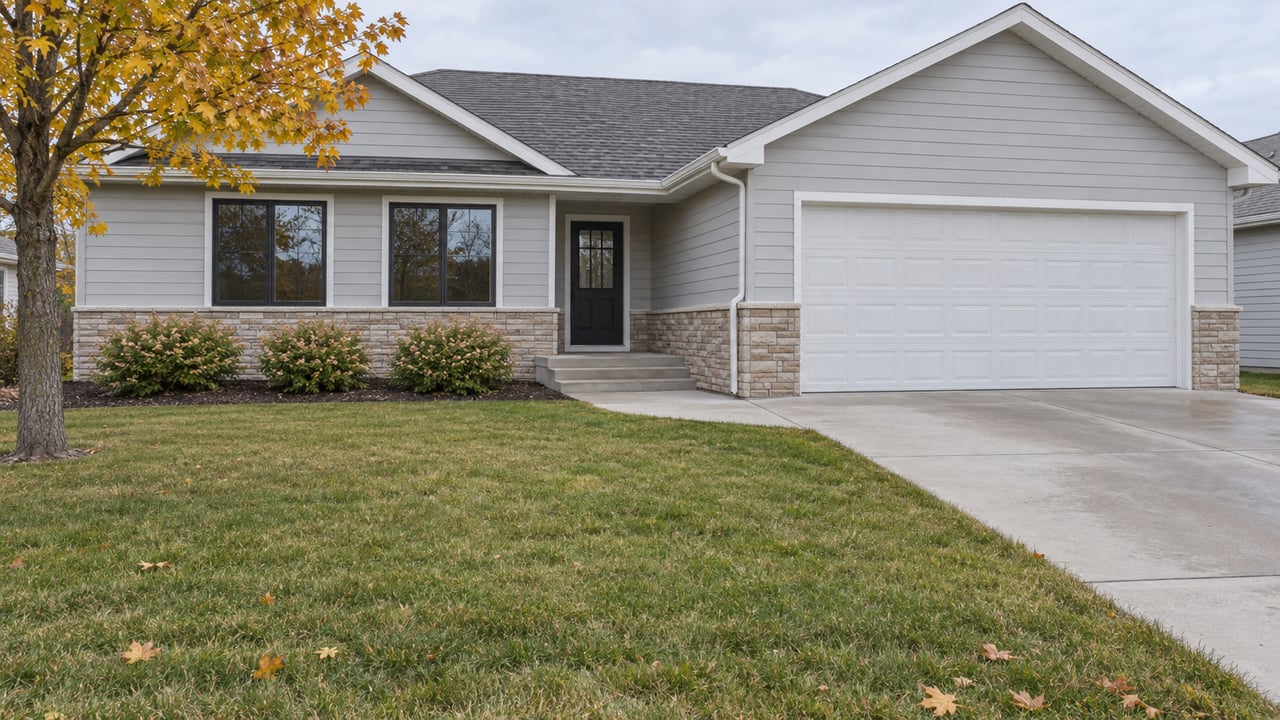
If you bought a Fargo home this summer or fall, the property tax statement Cass County mails in early December will probably arrive with a credit of up to $1,600 already applied. You never applied for it, and by the time you closed, the April 1 deadline had passed. The seller applied, and once the state approves a credit, North Dakota law keeps it on the house for the rest of the tax year, even after a sale.
For the year it's approved, the Primary Residence Credit belongs to the parcel. The friction shows up at the closing table, where the seller's share of 2026 taxes was estimated months before the real bill existed. Whether that estimate accounted for the credit decides whether buyer and seller each paid their fair share.
The credit stays with the house until December 31
The state's certification statute says an approved primary residence certification "is valid for the entire taxable year for which the application for certification was approved, without regard to any change of ownership of the property which occurs after the application for certification was approved." The Tax Commissioner reviews applications and decides who qualifies no later than May 31. Then the county notifies each applicant and records the classification on the assessment list.
The credit itself, under N.D.C.C. §57-02-08.9, is "a credit against the property tax due on the taxpayer's parcel." It is capped at $1,600, can't exceed the property tax due on that parcel, and can't reduce special assessments. The county auditor applies it "to each parcel of primary residential property on the corresponding property tax statement."
The application side runs on a fixed calendar. The Office of State Tax Commissioner accepts applications online only, from January 1 through April 1. Approved 2026 credits for a home on land the owner owns show up as a deduction on the 2026 statement mailed in December 2026. A household that moved into its Fargo home in June had no window left to apply for 2026. The seller's approved credit is the one that stays on the house.
Most homeowners claim this credit. In May 2026, InForum reported that the Tax Commissioner's Office had received 22,565 applications from Fargo. The paper compared that with roughly 26,200 owner-occupied homes in the city, based on 2024 Census estimates. Statewide, a June 24, 2026 Tax Commissioner presentation counted 164,052 approved applications for 2026. The North Dakota Association of Counties reported in October 2026 that Cass County was among the counties where a higher share of homeowners received the full $1,600, a pattern it tied to higher property values. So in Fargo, nearly every resale involves a seller with an approved credit, and in many cases it's the full amount.
Why the bill lands in the buyer's mailbox
Cass County mails real estate tax statements in early December to the owner of record as of November 1. Its advice to new owners is to check the closing statement or contact the title company to see who owes what. With this post going up in late October, any sale that records in the next few days will send the 2026 statement to the buyer.
Here's how the 2026 tax year runs for a home that sold this summer:
| Date | What happens | Who it involves |
|---|---|---|
| Jan. 1 to April 1, 2026 | Online application window for the 2026 credit | The seller, as the owner-occupant |
| By May 31, 2026 | Tax Commissioner approves or denies applications | The seller's application |
| Summer 2026 | Closing; 2026 taxes prorated between the parties | Buyer and seller, through the title company |
| Nov. 1, 2026 | Owner of record date for statement mailing | The buyer |
| Early Dec. 2026 | 2026 statement mailed with the credit applied | The buyer receives it |
| Feb. 15, 2027 | Deadline to pay in full and receive the 5% early-payment discount | Whoever pays the bill |
| Jan. 1 to April 1, 2027 | Buyer's first chance to apply in their own name, for tax year 2027 | The buyer |
The 2026 bill isn't issued until the year is almost over. Cass County mails it in December, and the regular installments are due March 1 and October 15. Everything about splitting it between buyer and seller happens months earlier, at closing, from an estimate.
The proration is supposed to use the after-credit number
This is the clause that matters at the closing table. Section 57-02-08.9 states that if the credit applies to a parcel "subject to a real estate transaction, any proration of the amount of property tax owed by a buyer or seller must be based on the amount of property tax owed after application of the credit."
Under that rule, the split starts from the tax that remains after the credit, so the credit is reflected in both the seller's months and the buyer's months. The name on the application and the name on the December envelope don't change that starting figure.
The standard North Dakota Association of REALTORS® purchase agreement, revision dated April 2023, says current-year real estate taxes are prorated from the assessor's current-year estimate. The seller's share is paid at closing, and the form warns that future taxes are estimates. If the estimate behind your proration started from the gross tax and didn't subtract the credit, the split on your settlement statement won't match what the statute describes. Your title company can tell you which figure it used.
If you closed on a Fargo home in 2026, these are the documents to pull before the December statement arrives:
- Your settlement statement, showing the 2026 tax proration line and the dollar figure it was based on.
- The December 2026 statement from Cass County. The county says the credit appears on the paper statement under consolidated tax.
- Any special assessment installments on the parcel, listed separately. The credit can't reduce those.
A January law changed the math on the December bill
There's a second change on this year's statements. During the special session that began January 21, 2026, the Legislature passed House Bill 1626. It requires the 5% discount for paying in full by February 15 to be applied before the Primary Residence Credit, starting with taxable years after December 31, 2025. Before that, counties took the discount off the net tax after the credit had been subtracted.
The order matters because 5% of a larger number is a larger discount. Using a hypothetical $5,000 consolidated tax bill with the full credit and payment by February 15:
| Step | Old order: credit first | New order: discount first |
|---|---|---|
| Starting tax | $5,000 | $5,000 |
| First step | Subtract $1,600 credit: $3,400 | Take 5% discount: $4,750 |
| Second step | Take 5% discount: $3,230 | Subtract $1,600 credit: $3,150 |
| Amount paid | $3,230 | $3,150 |
The $80 difference equals 5% of the $1,600 credit. InForum reported in August that Sen. Dean Rummel, R-Dickinson, put the added discount at $80 and said local governments have to cover it, while the credit itself is paid by the state through the Legacy Fund. The same article said Rep. Craig Headland, R-Montpelier, had argued in January that some taxpayers weren't receiving the full $1,600 because the discount was applied after the credit.
The change was hard to put into practice. The North Dakota Association of Counties reported that county software vendors had trouble programming the new calculation for 2026 bills but had recently made progress. A September bill to reverse it, Senate Bill 2405, passed the Senate 27 to 20 on September 3. The House defeated it the next day, 0 to 93. The discount-first order applies to the statements going out this December.
Cass County's discount is 5% of consolidated tax for bills paid in full on or before February 15. Special assessments and drain taxes don't get the discount, and the deadline moves to the next business day when February 15 falls on a weekend. The county also notes that all current-year taxes must be paid before a deed can be recorded, which matters if you're selling early next year.
For a buyer, the two rules combine. The December bill reflects the seller's credit and the new discount order. The amount you actually pay depends on whether you pay in full by February 15. Your closing proration was set months earlier from an estimate that may have assumed neither.
The buyer's own credit starts in 2027
The credit you inherited ends with the 2026 tax year. To have a credit on your 2027 statement, the one mailed in December 2027, you'll need to apply online between January 1 and April 1, 2027, at tax.nd.gov/prc. The state allows one credit per household and one primary residence per person, with no age or income limits. The Tax Commissioner's office takes questions at 701-328-7988 or [email protected] and helps applicants who don't have internet access.
Sellers moving within North Dakota should know that the credit approved on the home they sold stays with that parcel for the year. Their new home's credit depends on applying in the next window.
Quick answers for Fargo buyers and sellers
I sold in 2026. Do I lose my credit? Once approved, the certification stays valid on the parcel for the whole tax year, even after a change of ownership. The law requires any proration to use the tax owed after the credit, and your title company can show you how that was done on your settlement statement.
I bought in October. Who gets the December statement? Cass County mails it to the owner of record as of November 1.
Can the credit lower my special assessments? No. The statute specifically bars the credit from reducing special assessment liability.
This post is general information about how North Dakota's rules work, not legal, tax or financial advice. Please confirm your own figures with your title company or a tax professional.
If you're planning to sell in Fargo this winter or next spring, the 2026 credit, the discount order and the February 15 deadline all affect your net proceeds. I'm glad to go through those numbers with you as part of a free home valuation with Tyler Bretz so your net sheet shows what you'll actually take home.